Best Phone Accessories Worth Buying in 2026 (And What to Skip)
GmoArena participates in affiliate programs including the Amazon Services LLC Associates Program. We may earn a commission from qualifying purchases made through links on this page, at no additional cost to you.
Most phone accessories are a waste of money. Selfie sticks, novelty pop sockets, decorative cases that offer no protection, and the endless variety of cables that stop working after two months. Walk through any electronics market and the majority of what you see solves no real problem.
A small number genuinely change how the phone works in daily life. The best phone accessories are the ones you notice missing when you forget them, not the ones that sit in a drawer after the first week.
This guide covers seven that actually earn their place, what each one solves, and what to check before buying.
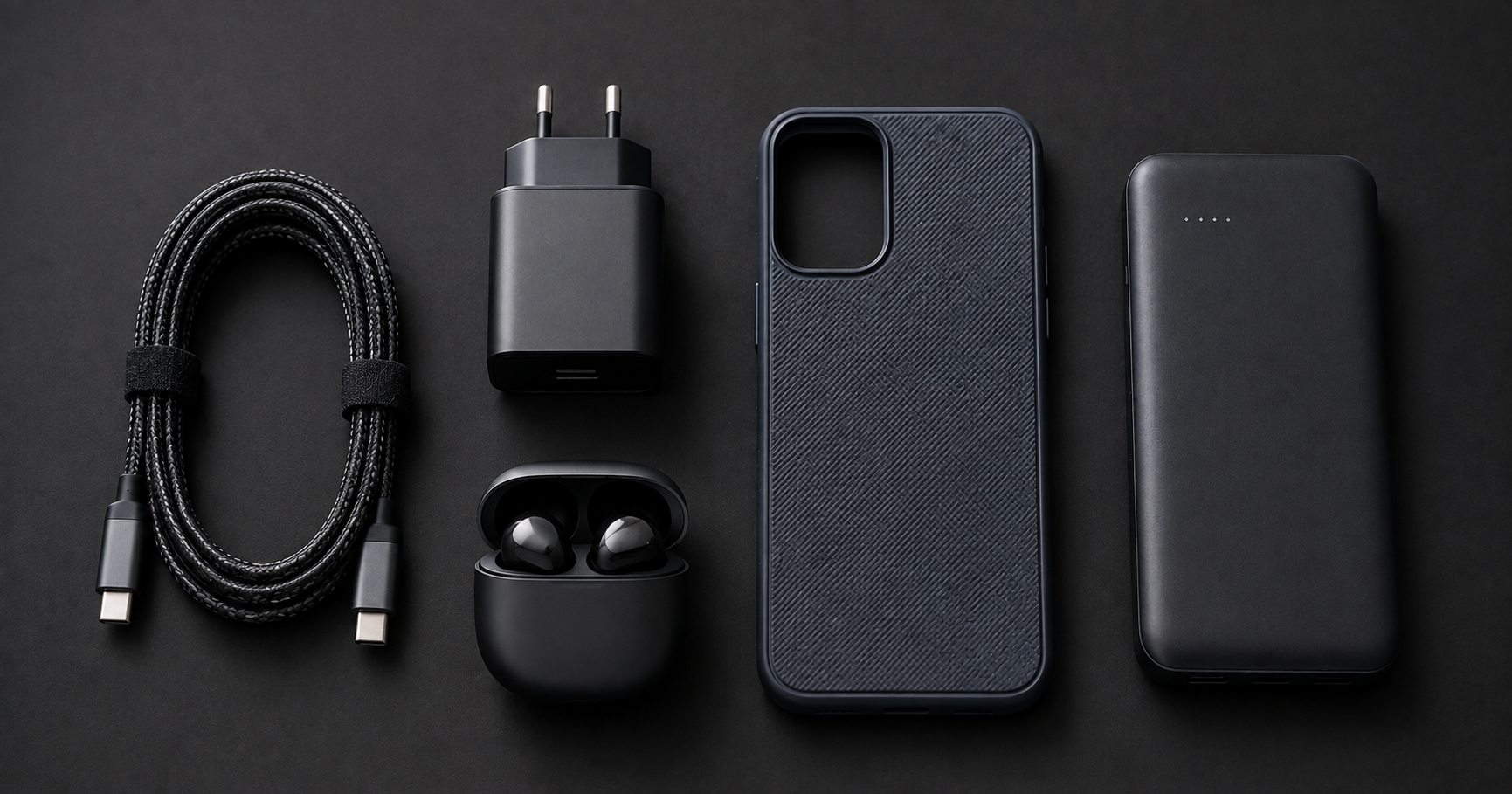
A Proper Charging Cable
Start here because it is the accessory most people get wrong most often.
The cable that came in the box, if one came at all, is usually the minimum specification the manufacturer could ship. Cheap replacements from a roadside stall frequently deliver unstable voltage, charge slowly, and fail within weeks.
What matters is the cable rating rather than the price. A USB-C cable rated for 60W or 100W Power Delivery charges at the speed your phone actually supports. A basic cable rated for 18W will bottleneck a phone capable of 65W charging, and you will never know why charging feels slow.
Braided cables last considerably longer than plain rubber ones, particularly around the connector where most cables fail.
What to check: the wattage rating, USB-C to USB-C for modern phones, and a braided outer sleeve.
Check charging cables on Amazon
A Fast Wall Charger
Many phones now ship without a charger, and the one you have from an older phone is probably limiting you.
A 65W GaN charger is the practical sweet spot in 2026. GaN technology allows a much smaller physical size at higher output, which means a charger that fits in a pocket and still charges a laptop. At 65W it handles a phone at full speed, a tablet, and most thin laptops.
The other advantage is port count. A single 65W charger with two or three ports replaces the tangle of separate adapters most people travel with.
For anyone dealing with loadshedding, charging speed is not a luxury. A phone that reaches 70 percent in half an hour is genuinely more useful than one that needs three hours, because the power window is unpredictable.
What to check: total wattage, number of ports, and whether the maximum output is available from one port or split across all of them.
A Power Bank
In most countries a power bank is convenience. In Pakistan it is closer to essential equipment.
The specification most people focus on is capacity, and it is the wrong one. A 20,000mAh bank that takes six hours to refill is less useful than a 10,000mAh bank that refills in forty minutes, because the constraint is not how much you can store but how quickly you can capture power when it is available.
For daily carry, 10,000mAh with fast input charging is the practical choice. For extended outages or travel, 20,000mAh covers a phone plus a second device through a long day.
We covered the full range of options including tested recommendations in our guide to the best power banks in 2026.
What to check: input charging speed, output wattage, and port configuration.
A Case That Actually Protects
Most cases sold are decorative. A thin silicone shell in an interesting colour does almost nothing when a phone lands corner-first on concrete.
What matters is a raised lip around the screen and camera, corner reinforcement, and shock-absorbing material rather than rigid plastic. A case with a raised edge means the screen never contacts the surface when the phone lands face down, which is how most screens crack.
This is the cheapest insurance available. A screen replacement costs a substantial fraction of the phone. A case costs a rounding error.
If your phone is one you plan to keep for four or five years, protection matters more than appearance. Our guide on how long a phone should last covers why physical damage is the one failure mode you can genuinely prevent.
What to check: raised screen and camera lip, reinforced corners, and a drop rating if stated.
Check protective cases on Amazon
A Tempered Glass Screen Protector
Cheap plastic film protectors scratch immediately and feel wrong under a finger. Tempered glass is the only version worth buying.
The relevant specification is hardness, usually stated as 9H, and thickness, where 0.3mm is standard. Thinner protectors feel better but offer less protection.
Buy a two-pack. The first application frequently traps dust or lands slightly crooked, and having a spare removes the pressure to accept a bad result.
What to check: 9H hardness, oleophobic coating to resist fingerprints, and compatibility with your specific model rather than a general size.
Check screen protectors on Amazon
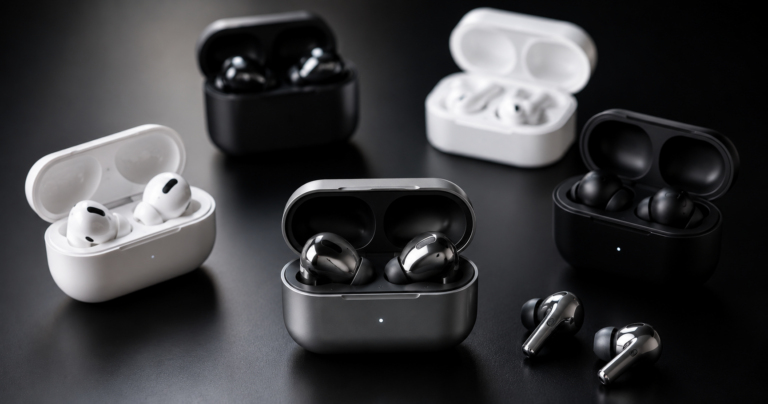
Wireless Earbuds
The single accessory that changes daily phone use most, particularly since headphone jacks disappeared.
The category has improved dramatically at the budget end. Active noise cancellation that genuinely works is now available well under $100, and battery life on mid-range models comfortably covers a full day.
Call quality is where cheap earbuds most commonly fail, and it is worth weighting heavily if you take calls regularly. Sound quality differences between a $60 pair and a $250 pair are far smaller than the price gap suggests for most listening.
We compared nine tested options across every budget in our guide to the best wireless earbuds in 2026.
What to check: battery life with ANC enabled, call quality reviews specifically, and ear tip options in the box.
Check wireless earbuds on Amazon
A Car Mount or Phone Stand
Unglamorous and genuinely useful.
A car mount turns navigation from a hazard into a normal function. Magnetic mounts are faster to use than clamp designs and hold securely with a metal plate inside the case.
A desk stand matters more than most people expect for anyone taking video calls, following a recipe, or watching something while working. Propping a phone against a cup is a habit worth replacing.
What to check: for car mounts, whether the magnet interferes with wireless charging, and mount stability at speed on rough roads.
What to Skip
Being honest about what not to buy is as useful as recommendations.
Selfie sticks. Rarely used after the first week and banned in many venues.
Clip-on phone camera lenses. Almost always degrade image quality below what the phone’s own software already achieves.
Cheap wireless chargers. Slower than a cable and generate more heat, which is the primary cause of battery degradation. In hot climates this is a genuine downside rather than a minor one.
Screen cleaning kits. A microfibre cloth and water works identically.
Multi-device charging stands unless you actually own the multiple devices they are designed for.
Browse all recommended phone accessories
Buying in Pakistan and India
Counterfeits are the main risk. Anker, Baseus, UGREEN, and Samsung accessories are among the most frequently faked products in South Asian markets. A counterfeit charger is not simply lower quality, it often lacks the voltage regulation and thermal protection that prevent damage to your phone.
Buy chargers and cables from authorised sellers. This is the one category where saving a few hundred rupees carries real risk. A faulty charger can damage the battery or the charging circuit.
Cases and screen protectors are lower risk. Local market versions are usually adequate and considerably cheaper than imported branded options.
Check the wattage claim. Fake chargers routinely advertise 65W and deliver 18W. If a 65W GaN charger costs a fraction of the market price, it is not a 65W GaN charger.
What are the best phone accessories to buy first?
A protective case with a raised screen lip and a tempered glass screen protector should come first, because together they cost very little and prevent the most expensive common failure, which is a cracked screen. After that, a properly rated charging cable and a fast wall charger produce the biggest daily improvement, since the cable and adapter shipped with most phones limit charging speed well below what the device supports.
Do wireless chargers damage phone batteries?
Wireless charging generates more heat than wired charging, and heat is the primary cause of lithium-ion battery degradation, with temperatures above 35 degrees Celsius causing permanent capacity loss. In hot climates this makes wireless charging a meaningfully worse option for long-term battery health. It is not damaging in the sense of causing immediate harm, but over years of daily use a phone charged by cable will typically retain more battery capacity than one charged wirelessly in a warm environment.
Is it safe to buy cheap phone chargers?
Chargers and cables are the one accessory category where cheap carries genuine risk. Counterfeit and unbranded chargers frequently lack proper voltage regulation and thermal protection, which can generate excess heat, charge unpredictably, and in rare cases damage the phone’s battery or charging circuit. Fake units also routinely advertise wattage they cannot deliver. Buy chargers and cables from authorised sellers or established brands, and treat a suspiciously low price on a high-wattage charger as a warning rather than a bargain.
The Short Version
Buy a case with a raised lip and a tempered glass protector first. They cost almost nothing and prevent the most expensive thing that commonly happens to a phone.
Then buy a properly rated cable and a 65W GaN charger, because the ones in the box are almost certainly limiting your charging speed.
Add a power bank if you deal with unpredictable electricity, and earbuds if you take calls or listen while moving.
Skip everything else until you have a specific reason. The best phone accessories are the small number that solve a real daily problem, and most of what is sold does not.
For more buying guides, comparisons, and phone advice, visit GmoArena’s Mobile Phones section.
Sources and Further Reading
- USB Implementers Forum documentation on USB Power Delivery specifications
- Published lithium-ion battery research on temperature and capacity retention
- Manufacturer charging specifications for Samsung, Apple and Xiaomi devices
About this article: Written by the GmoArena editorial team covering global celebrity culture, mobile technology, travel destinations, and the stories that matter.