
How to Get Your WhatsApp Username Before Someone Else Takes It
For seventeen years, WhatsApp worked on one unbreakable rule: to talk to someone, you needed their phone number. Selling a sofa on Facebook Marketplace meant handing your number to a stranger. Contacting a plumber meant the same. Joining a community group meant every member could see it.
That rule is now gone. Meta has begun rolling out the WhatsApp username feature globally, and it is the most significant privacy change the app has made in years. You can reserve yours right now, before the full rollout reaches everyone.
Here is what it actually does, what it does not do, and why the second part matters more than most coverage has admitted.
What the WhatsApp Username Feature Actually Is
A WhatsApp username is a unique handle that lets people find you and start a conversation without ever seeing your phone number. Someone types your username, finds your profile, and messages you. Your number stays hidden.
It also works for calls. You can receive both voice and video calls from people who only know your username, with no phone number exchanged in either direction.
Telegram has offered this for years, which is part of why WhatsApp’s shift matters. With more than three billion users, WhatsApp moving to a handle-based identity model changes how a substantial portion of the world manages online contact.
Unlike Discord, WhatsApp usernames are unique on their own without a numbered tag attached. You check availability during setup and claim the handle if nobody has taken it.
How to Reserve Your Username Now
Meta is rolling this out gradually rather than switching it on for everyone at once. The reservation stage came first specifically so people could claim their preferred handle before the feature opens fully worldwide.
Step 1: Update WhatsApp to the latest version from your app store.
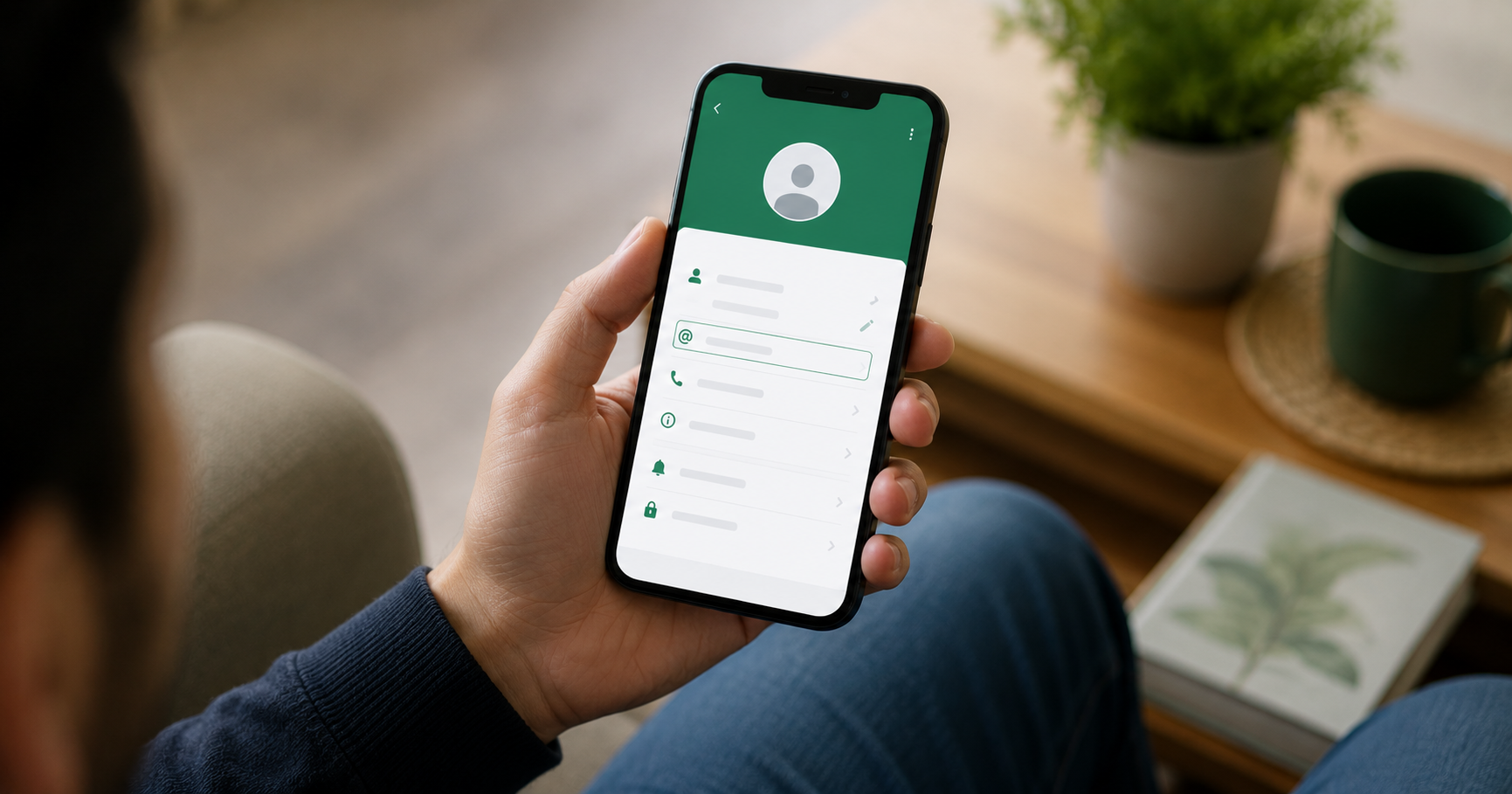
Step 2: Open Settings and tap your profile at the top.
Step 3: Look for the username option. If it is not there yet, your account has not received the rollout. Check again in a few days.
Step 4: Type your preferred handle and check availability.
Step 5: Claim it.
Businesses, organisations, and creators with existing accounts on Instagram and Facebook get the opportunity to claim their usernames as matching handles across Meta platforms. If you run a page on either, check for that option early rather than discovering someone else has taken your brand name. To follow more technology coverage and app guides, visit GmoArena’s Technology section.
Username Keys: The Part Nobody Is Explaining
Alongside usernames, WhatsApp introduced an optional security layer called a username key. It is a short numbered code that sits alongside your handle.
With a key enabled, someone needs both your username and the key to contact you. Knowing the handle alone is not enough. This closes an obvious hole, because a public username that anyone can guess or find would otherwise become a magnet for spam and scam messages.
Two additional protections came with the rollout. WhatsApp now limits how many new people a single account can contact, which directly targets bulk spam operations. And the platform says its systems can now detect and block abuse patterns automatically.
For anyone in Pakistan or India, where WhatsApp scam messages from unknown numbers are a daily occurrence, these protections are arguably more valuable than the username itself.
The Limitation That Matters Most
This is where the WhatsApp username feature stops being a complete privacy solution, and it is essential to understand before assuming your number is now hidden.
Anyone who already has your number saved will still see it. Adopting a username does not retroactively hide your number from existing contacts. Every person who saved your number before today keeps that visibility.
Businesses you contacted recently retain access. If you have messaged or called a WhatsApp Business account within the last thirty days, that business keeps access to your number under WhatsApp’s thirty-day interaction window rule. Every outbound message a business sends to your number resets that window.
The practical effect is that the privacy benefit applies almost entirely to new contacts and first-time interactions. That is genuinely useful, but it is not the same as making your number invisible.
If your number has been circulating for a decade across Marketplace listings, group chats, and business enquiries, a username does not undo any of that. What it does is stop the list from growing.
Why This Is Genuinely Useful in Pakistan and India
WhatsApp occupies a different position in South Asia than it does in Europe or the United States. It is the default channel for business, customer service, family coordination, community organising, and informal commerce.
That ubiquity creates a specific problem. A small business owner posting on a local Facebook group hands their personal number to hundreds of strangers. A woman selling handmade products online exposes a number that is also her personal line. A freelancer sharing a number for client enquiries has no way to separate it from family communication.
Usernames address this directly. For freelancers and small sellers particularly, being able to publish a handle instead of a number removes the need to maintain a second SIM purely to protect the first one.
The harassment dimension is worth naming plainly. Unsolicited messages from unknown numbers are a widespread problem, and the ability to interact commercially without distributing a personal number is a meaningful protection.
What Businesses Need to Do
If you use WhatsApp for customer communication, this affects your systems directly.
WhatsApp gave businesses a deadline of June 2026 to update all systems supporting usernames and the new business-scoped identifier. Businesses using the WhatsApp Business API need to review anything that depends on phone numbers, including CRM integrations, analytics tools, and support dashboards.
Businesses that have not implemented support risk losing messages from username adopters via click-to-WhatsApp ads, user-initiated service messages from customers who hide their numbers, new inbound messages from privacy-enabled users, and accurate conversation history records.
One practical note for business operators: sending outbound messages to your existing contact list regularly resets the thirty-day interaction window and keeps phone numbers visible in your webhooks.
Should You Set One Up?
Yes, and specifically because reservation is happening before full rollout.
Usernames are unique and first come first served. Whatever handle you would want, someone else may want the same one. Reserving costs nothing, takes under a minute, and you can use it or ignore it afterwards.
Enable the username key if you plan to share the handle publicly. A handle posted on a business page or social profile without a key is an open invitation for automated spam.
And be realistic about what changes. Your number is not suddenly private. What you gain is the ability to have every future first contact happen without exposing it, which over the coming years is a meaningful difference.
What is the WhatsApp username feature?
A WhatsApp username is a unique handle that allows people to find you and start a conversation, including voice and video calls, without seeing your phone number. Meta began rolling it out globally in 2026, ending seventeen years of WhatsApp relying almost entirely on phone numbers for identity. Usernames are unique without a numbered tag, unlike Discord, and you check availability during setup. An optional username key, a short numbered code, can be enabled so people need both your handle and the key to contact you.
Does a WhatsApp username hide your phone number completely?
No. Anyone who already has your phone number saved in their contacts will continue to see it after you adopt a username. Additionally, if you have messaged or called a WhatsApp Business account within the last thirty days, that business retains access to your number under WhatsApp’s thirty-day interaction window rule, and any outbound message from that business resets the window. The privacy benefit applies primarily to new contacts and first-time interactions rather than retroactively hiding your number from existing contacts.
How do you reserve a WhatsApp username?
Update WhatsApp to the latest version, open Settings, tap your profile at the top, and look for the username option. If it does not appear, your account has not yet received the gradual rollout and you should check again in a few days. Type your preferred handle, check availability, and claim it. Businesses, organisations, and creators with existing Instagram or Facebook accounts have the opportunity to claim matching handles across Meta platforms, which is worth doing early to protect a brand name.
The Short Version
Seventeen years of phone-number-only identity has ended. Reserve your handle now because they are unique and first come first served. Turn on the username key if you intend to share it publicly.
Then remember that your number is not hidden from anyone who already has it. What you have gained is control over every conversation that starts from today onward, which for most people is the majority of the conversations still ahead of them.
For more technology guides, app coverage, and analysis of the tools shaping daily life, visit GmoArena’s Technology section.
Sources and Further Reading
- Al Jazeera on WhatsApp privacy changes, username keys and anti-spam limits
- WABetaInfo on the official username timeline and business identifier requirements
- Barristery on the thirty-day interaction window and existing contact limitations
About this article: Written by the GmoArena editorial team covering global celebrity culture, mobile technology, travel destinations, and the stories that matter.
Editorial Note: Feature details in this article are based on Meta’s announcement and reporting from Al Jazeera, WABetaInfo, Ynet News, and Mobile Ecosystem Forum during 2026. WhatsApp is rolling the feature out gradually and availability varies by region and account. Some implementation details, including how username disputes are resolved, had not been fully clarified at the time of writing.