SpaceX Builds AI Data Centers in Space as Musk Becomes Trillionaire
Imagine a supercomputer wider than a Boeing 747, floating silently in orbit, powered entirely by the sun, running artificial intelligence for millions of people below. This is no longer science fiction. In 2026, SpaceX has unveiled exactly that and in doing so, helped make Elon Musk the world’s first trillionaire. The race to build AI data centers in space has officially begun, and it may reshape how the entire internet works.
Following one of the most anticipated stock market debuts in history, SpaceX is now betting that the future of artificial intelligence lies not in massive warehouses on Earth, but in a constellation of solar-powered satellites orbiting the planet. Here is everything you need to understand about the most audacious technology bet of the decade.
SpaceX Unveils the AI1 Orbital Supercomputer
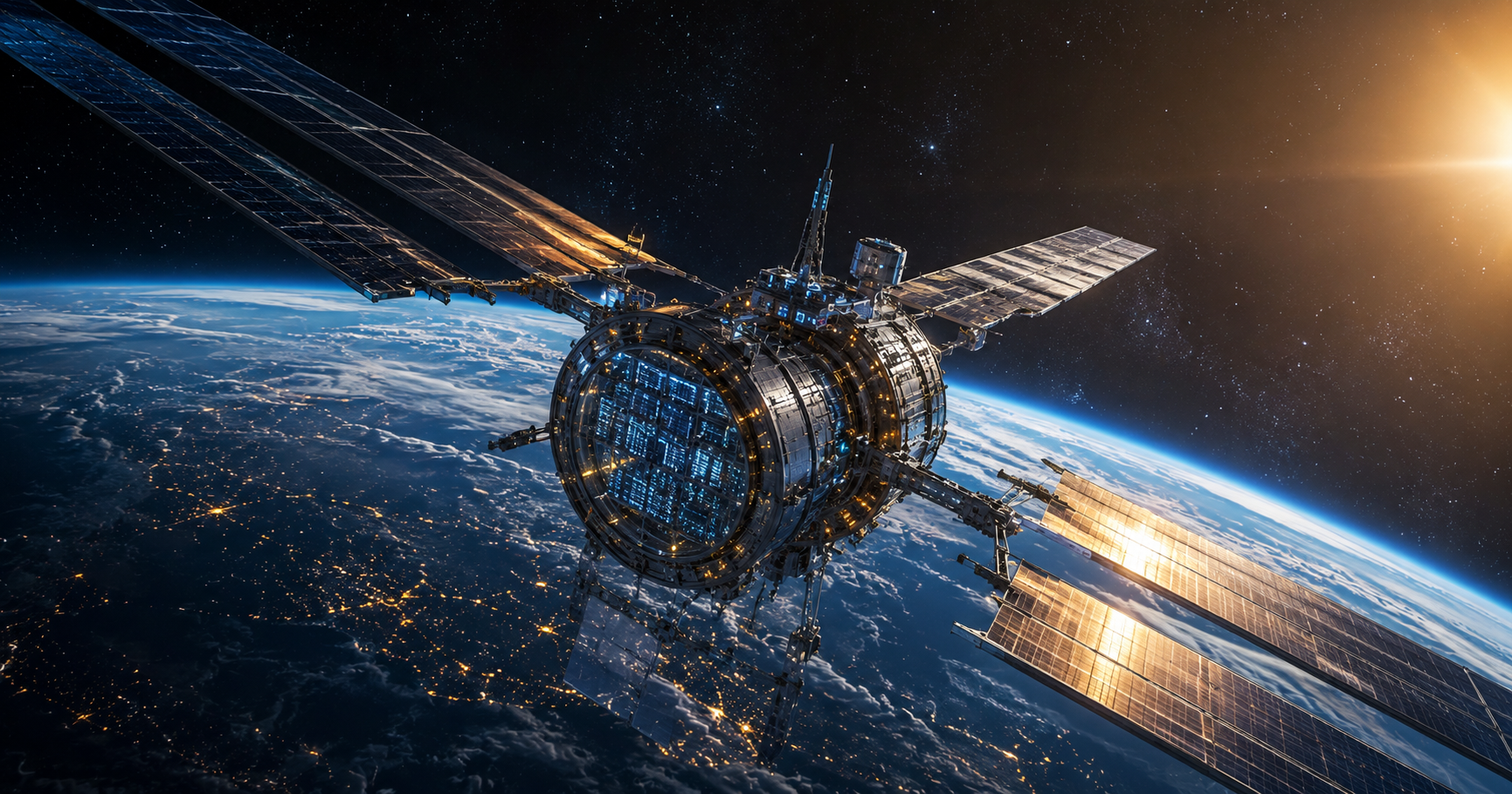
On June 8, 2026, SpaceX officially revealed the AI1 satellite the first generation of its orbital artificial intelligence compute platform. Unveiled by Elon Musk just days before the company’s landmark IPO, the AI1 is not a communications satellite. It does not beam internet to homes or relay phone calls. At its core, it is a flying AI supercomputer.
The specifications are striking. The AI1 features a wingspan of roughly 70 meters tip to tip wider than a Boeing 747-8. It generates significant solar power and radiates waste heat directly into the cold vacuum of space, solving one of the biggest challenges facing data centers on Earth: cooling. Musk described it as intentionally simpler than a Starlink satellite, essentially a large solar panel attached to a computing rack and a radiator.
Why Build Data Centers in Space at All?
The logic behind orbital data centers is surprisingly compelling. Every major AI company faces the same constraint: training and running large AI models requires enormous amounts of electricity. A single large training run can consume as much power as a small city for weeks. On top of that, serving those models to millions of users adds a constant, growing energy demand.
The International Energy Agency projects that AI data centers will consume roughly 1,000 terawatt-hours of electricity per year by 2026 representing an estimated 3 to 4 percent of total US electricity consumption and rising sharply. Space offers a radical solution: unlimited solar power with no grid connection needed, the vacuum of space as an infinite heat sink, and no land use at all. In orbit, the sun shines almost constantly, meaning nearly uninterrupted power generation. To explore more about emerging technology shaping our future on GmoArena, browse our latest features on innovation and AI.
The SpaceX IPO That Created the First Trillionaire
The timing of the AI1 reveal was no accident. SpaceX executives rang the closing bell at the Nasdaq on June 12, 2026, marking the debut of one of the largest IPOs ever. The offering reportedly raised tens of billions of dollars and valued the newly public company in the trillions making Elon Musk, by many accounts, the world’s first trillionaire.
Investors were not simply betting on rockets anymore. They were betting on an entire orbital ecosystem: reusable Falcon rockets, the Starlink satellite internet network, direct-to-mobile communications, and now AI compute infrastructure in space. In February 2026, SpaceX had acquired xAI, Musk’s artificial intelligence company and developer of the Grok language model, merging rockets and AI under one roof.
SpaceX Is Not Alone in the Space Compute Race
While SpaceX is the loudest voice in orbital AI computing, it faces serious competition. Amazon founder Jeff Bezos has voiced similar ambitions through his ventures Blue Origin and Prometheus. In a recent interview, Bezos called building data centers in space “very realistic,” though he cautioned that some timelines being discussed are overly ambitious.
Blue Origin has submitted plans to launch tens of thousands of data center satellites into low Earth orbit as part of its Project Sunrise initiative. NVIDIA announced its own space-focused compute module earlier in 2026. Meanwhile, a startup called Panthalassa is taking a completely different approach building floating data centers at sea, powered by wave energy, as an alternative to both land-based and orbital facilities.
The Serious Challenges Ahead
Despite the excitement, the technical hurdles are enormous. Space is a harsh and expensive environment. Major challenges include radiation exposure that can damage chips, the difficulty of repairs and maintenance once hardware is in orbit, cooling complications, and the growing problem of orbital debris.
Critics also point out that the first AI1 satellite is reportedly far less capable than current Earth-based data centers. Many computing tasks financial transactions, interactive AI services, and most cloud applications are extremely sensitive to delay, making them poorly suited for space where signals must travel long distances. More realistic early uses may include processing satellite imagery, scientific computing for space missions, and specialized tasks less sensitive to latency.
What This Means for the Future of AI
If orbital data centers succeed, the implications are profound. The primary bottleneck for scaling AI today is energy the grid capacity and cooling infrastructure needed to power massive data centers. Orbital compute could sidestep both constraints entirely. SpaceX projects that within two to three years, space could become one of the lowest-cost locations for AI compute, though many independent experts consider that timeline optimistic.
SpaceX plans to launch prototype AI1 satellites in early 2027, with full commercial constellation deployment beginning later in the decade. Whether this becomes the foundation of the future internet or an enormously expensive experiment remains to be seen but the ambition alone is reshaping how the world thinks about computing.
What is the SpaceX AI1 satellite?
The AI1 is SpaceX’s first orbital AI compute satellite, unveiled on June 8, 2026. It functions as a solar-powered supercomputer in low Earth orbit with a wingspan of roughly 70 meters. Rather than providing internet like Starlink, it is designed to run artificial intelligence workloads from space, using solar energy for power and the vacuum of space for cooling.
Why does SpaceX want to build data centers in space?
AI data centers on Earth face growing constraints: enormous electricity demand, expensive cooling requirements, and community opposition to their power and water usage. Space offers abundant solar energy with almost constant sunlight, natural cooling through the vacuum of space, and no land use. SpaceX believes orbital compute could eventually become cheaper than building data centers on Earth.
When will space-based AI data centers actually launch?
SpaceX plans to launch prototype AI1 satellites in early 2027, with a dedicated production facility expected to begin operating by the end of that year. Full commercial deployment of the satellite constellation is projected to begin later in the decade. However, many independent experts believe these timelines are ambitious given the significant technical and economic challenges involved.
Conclusion
The unveiling of SpaceX’s AI1 satellite and the trillion-dollar IPO that followed mark a genuine turning point in the history of technology. Whether or not orbital data centers ultimately prove practical, the fact that the world’s most valuable company is betting billions on the idea signals just how desperate the AI industry has become for new sources of power and computing capacity. From solar-powered satellites to wave-powered ocean buoys, the search for AI’s next home has moved far beyond the traditional data center and the coming years will reveal whether the future of artificial intelligence truly lies among the stars.
For more coverage of the technology, AI breakthroughs, and innovations shaping tomorrow, visit GmoArena.com your global source for the stories that matter.
Sources and Further Reading
- Space-based Data Center Wikipedia
- CNBC Do Space-Based AI Data Centers Make Economic Sense?
- Space.com SpaceX AI Satellite Coverage
About this article: Written by the GmoArena editorial team covering global celebrity culture, mobile technology, travel destinations, and the stories that matter.
Editorial Note: Company valuations, technical specifications, and projected timelines in this article are based on publicly available reporting at time of publication. Figures and plans may change as the technology develops. Readers are encouraged to verify current information through official sources before making decisions.