LFP, NMC, Sodium-Ion or Solid-State: Which Battery Should You Actually Buy in 2026?
lfp vs nmc battery 2026
Walk into any solar shop in Islamabad or Lahore and ask which battery you should buy. You will get an answer within about four seconds, and it will almost certainly be whichever one the shop has in stock. Ask why, and the explanation gets vague quickly.
This matters more than most buyers realise, because the battery is the single most expensive component in both a solar setup and an electric vehicle. In an EV, the battery pack accounts for as much as 40 percent of the vehicle’s total price. Choosing the wrong chemistry means either paying for capability you will never use or replacing a system years earlier than you needed to.
There are four chemistries competing for your money in 2026, plus one older technology that refuses to disappear. Here is what each one actually does, where it makes sense, and which one deserves your money.
LFP: The One That Won
Lithium iron phosphate has quietly taken over. Three out of four electric vehicles sold in China in 2024 used LFP, and General Motors is importing CATL cells for the 2027 Chevrolet Bolt. That is not a niche technology. That is the default.
The reason comes down to three things. LFP cells cost around 52 US dollars per kilowatt hour at the low end, compared with a 2025 lithium-ion average of 74 dollars. They deliver the longest cycle life of any mass-market lithium-ion chemistry, typically 3,000 to 5,000 full charge cycles before meaningful degradation. And they contain no cobalt or nickel, which sidesteps both the supply chain ethics problem and a significant chunk of the cost.
Safety is the other genuine advantage. LFP has a much lower risk of thermal runaway than nickel-based chemistries, with onset occurring in the 180 to 220 degree Celsius range compared to 150 to 180 for NMC. As one industry analyst put it, LFP does not generate its own oxygen to feed a fire.
The trade-offs are real though. Energy density is lower than NMC, which means less range per kilogram in a vehicle and a larger physical footprint in a solar installation. Cold weather performance is weak, with some real-world reports of LFP electric vehicles dropping to as little as 125 miles of range in genuinely cold conditions.
For Pakistani solar buyers, this is almost always the right answer. The cold weather weakness is irrelevant in most of the country, space for a slightly larger battery cabinet is usually available, and the 13 plus year lifespan at 5,000 cycles is exactly what you want from something you are installing once.
NMC: The Range Chemistry
Nickel manganese cobalt is what you use when energy density genuinely matters. At 250 to 280 watt hours per kilogram, it substantially outperforms LFP’s 150 to 200, which translates directly into longer driving range from a pack of the same weight.
NMC is the clear choice for frequent long distance driving, delivering real-world range past 300 miles alongside solid cold weather performance and fast charging speeds suited to highway stops. Premium electric vehicles and commercial trucks lean heavily on it for exactly these reasons.
For solar storage, the maths is less favourable. Installed cost in 2026 runs roughly 450 to 750 euros per kilowatt hour, slightly higher than LFP once adjusted for equivalent cycle life. The lifecycle difference is larger still: an NMC battery cycling daily at 2,000 cycles needs replacing after five to six years, while an LFP battery at 5,000 cycles lasts thirteen years or more.
NMC makes sense for solar in one specific situation, which is when space is genuinely constrained and you accept shorter warranty coverage in exchange for a smaller footprint. Otherwise LFP wins on cost per year of service. To read more technology coverage and guides, visit GmoArena’s Technology section.
Sodium-Ion: The Interesting One
This is the chemistry worth paying attention to over the next few years, and it has moved from laboratory curiosity to actual product faster than most people expected.
Sodium-ion swaps lithium for sodium, which is vastly more abundant and considerably cheaper. CATL announced its first commercial sodium-ion cell in 2021 and began volume production in 2023. BYD is building a sodium-ion gigafactory targeting its cheapest urban vehicles.
The energy density gap that held it back has largely closed. CATL’s Naxtra sodium-ion cell reaches 175 watt hours per kilogram, essentially at parity with mainstream LFP at 160 to 180. At pack level LFP retains a roughly 10 to 15 percent advantage due to more mature management and thermal integration, but that gap will narrow as sodium-ion systems mature.
Where sodium-ion genuinely wins is safety and cold performance. Thermal runaway onset occurs around 210 degrees Celsius, at the upper end of the range, and the self-heating rate during thermal events stays below 10 degrees per minute in optimised formulations. In nail penetration testing, the standard industry abuse test, sodium-ion cells produce peak temperature rises 40 to 60 degrees lower than comparable lithium cells. It also retains more capacity at minus 20 degrees Celsius than LFP does.
The ceiling is the limitation. Sodium’s larger ionic radius and lower redox potential cap energy density at around 180 to 200 watt hours per kilogram even with advanced cathodes, well below NMC’s 250 to 280. Sodium-ion will not power long-range vehicles. It will very plausibly become the default for cheap city cars, commercial storage, and cold climate applications.
For Pakistan, sodium-ion is worth watching rather than buying today. Availability is limited and the price advantage has not yet reached retail buyers in this market. Revisit in 2027 and 2028.
Solid-State: Read This Before You Believe Anyone
Solid-state batteries generate the most excitement and the least actual availability, and there is a specific piece of information you need before anyone tries to sell you one.
As of 2026, roughly 90 percent of vehicles marketed as having solid-state batteries are actually running semi-solid or quasi-solid chemistry. True full solid-state production at scale is not expected before 2028 to 2030. Any salesperson using the phrase this year deserves a follow-up question about which specific chemistry is inside.
The technology is genuinely promising. Replacing the liquid electrolyte with a solid one should deliver higher energy density, faster charging, and substantially better safety. Early solid-state vehicles will almost certainly be expensive halo models before the technology reaches ordinary buyers.
The practical advice is straightforward: do not wait for solid-state. Buy or install the technology that exists today and revisit the market when you next need to replace something.
Lead-Acid: Still Here, Usually Wrong
Lead-acid predates lithium-ion by more than 150 years and remains in production globally, available for solar in flooded, sealed AGM, and gel variants. It is still widely sold across Pakistan, largely because the upfront price looks attractive.
That upfront price is misleading. Lead-acid delivers a fraction of the cycle life of LFP, cannot be discharged deeply without damage, requires maintenance in flooded variants, and needs replacing several times over the lifespan of a single LFP installation. Calculated over ten years rather than at the point of purchase, it is more expensive.
Lead-acid makes sense in exactly one situation: when the total budget genuinely cannot accommodate lithium and something is better than nothing. That is a real constraint for many households, and there is no shame in it. Just go in understanding that you are buying a shorter-term solution.
Choosing for a Pakistani Solar System
Pakistan imported 22 gigawatts worth of solar panels in 2024 alone, against a total national installed capacity of 46 gigawatts. That is one of the fastest residential solar adoption curves anywhere in the world, driven almost entirely by chronic loadshedding rather than climate policy.
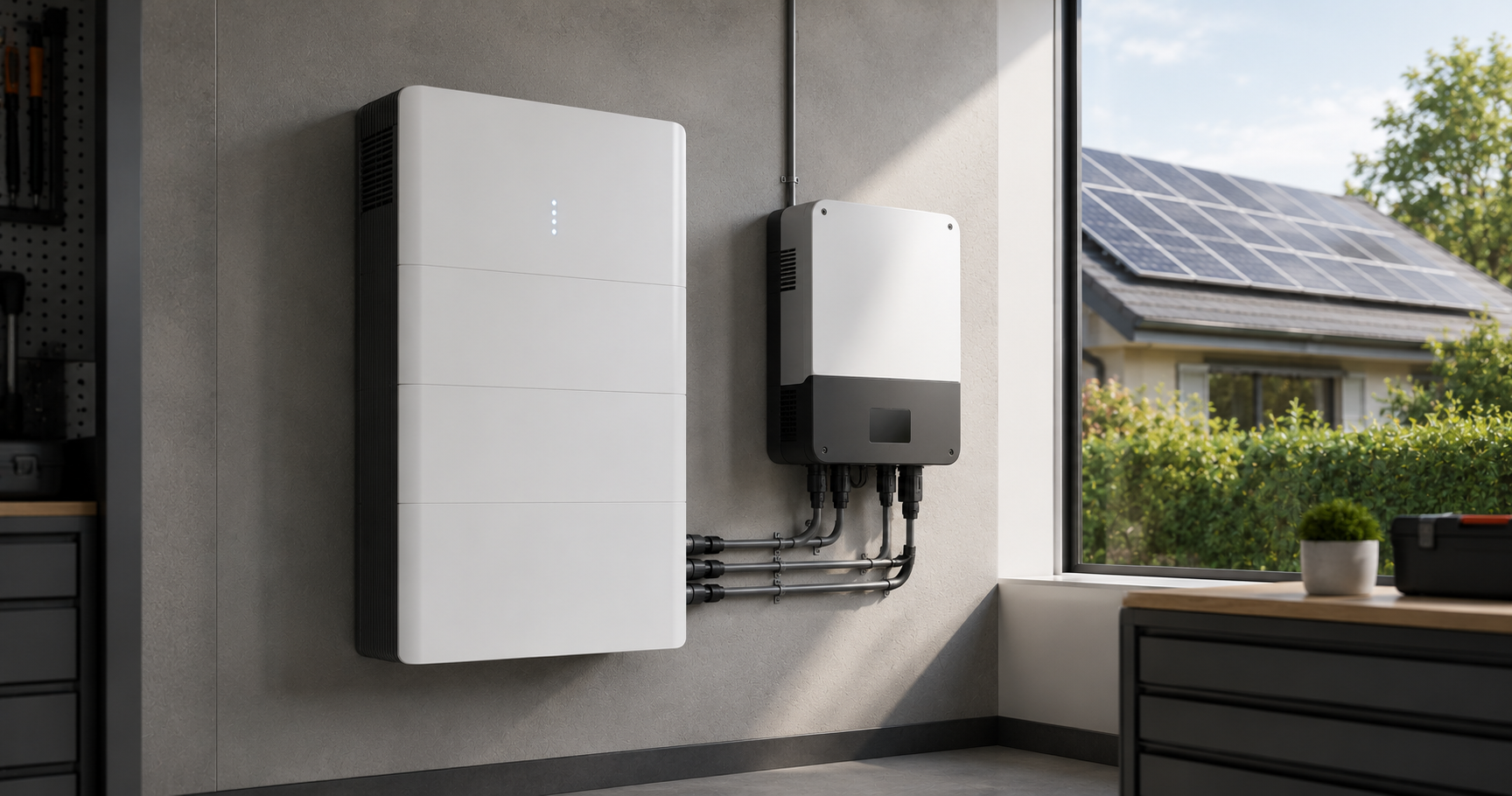
Most of those installations are panels only, with no battery storage. That works during daylight hours and does nothing at 10pm when the grid goes down. Adding storage is the natural next step for households who have already invested in panels.
For that use case, LFP is the answer in almost every scenario. The cycle life means the battery outlasts the loan you took to buy it. The thermal safety matters in a country where summer temperatures routinely exceed 40 degrees. The cold weather weakness is irrelevant outside the far north. And the price gap against lead-acid closes completely once you account for replacement cycles.
Size the system to cover your evening load rather than your entire daily consumption. Most households need enough storage to run lights, fans, a refrigerator, and phone charging from sunset to sleep, which is a far smaller and cheaper battery than one sized for full off-grid independence.
Choosing for an Electric Vehicle
Electric vehicle adoption in Pakistan remains early, but the two-wheeler and three-wheeler market is moving faster than the car market and the same chemistry logic applies.
For city commuting under 30 miles a day, LFP makes the most sense. You do not need extreme range, charging at home or work covers your needs, and safety matters more than raw performance in stop-and-go traffic. Warm climate drivers should lean LFP specifically for its cost and durability.
For frequent long distance driving, NMC is the clear choice, delivering the range and fast charging that highway travel actually requires.
For tight budgets and entry level vehicles, LFP remains the safest bet in 2026 thanks to mature technology and wide model availability.
Which battery is best for a solar system in Pakistan?
LFP, or lithium iron phosphate, is the strongest choice for most Pakistani solar installations. It delivers 3,000 to 5,000 charge cycles compared to lead-acid’s far shorter lifespan, translating to 13 or more years of daily cycling. Its thermal safety profile is significantly better than nickel-based chemistries, with thermal runaway onset in the 180 to 220 degree Celsius range, which matters in a climate where summer temperatures regularly exceed 40 degrees. LFP’s main weakness, poor cold weather performance, is largely irrelevant across most of Pakistan. While lead-acid batteries appear cheaper upfront, they require multiple replacements over the lifespan of a single LFP system, making them more expensive over ten years.
What is the difference between LFP and NMC batteries?
The difference comes down to cathode composition and cascades into everything users care about. LFP uses lithium, iron, and phosphate with no cobalt or nickel, delivering lower cost at around 52 dollars per kilowatt hour, the longest cycle life of any mass-market lithium chemistry at 3,000 to 5,000 cycles, and superior thermal safety. NMC uses nickel, manganese, and cobalt, delivering substantially higher energy density at 250 to 280 watt hours per kilogram versus LFP’s 150 to 200, which means longer vehicle range and a smaller physical footprint, alongside better cold weather performance. LFP suits budget-conscious buyers and warm climates. NMC suits long-range driving and space-constrained installations.
Should I wait for solid-state batteries before buying?
No. As of 2026, approximately 90 percent of products marketed with solid-state batteries are actually semi-solid or quasi-solid chemistry rather than true full solid-state. Genuine full solid-state production at scale is not expected before 2028 to 2030, and early vehicles using it will be expensive premium models before the technology reaches mainstream pricing. Buy or install LFP or NMC today based on your actual requirements and revisit the market when your current system next needs replacing.
The Short Version
If you are installing solar storage in Pakistan, buy LFP. The cycle life, the safety margin in high heat, and the total cost over ten years all point the same direction, and no other chemistry currently available makes a better case.
If you are buying an electric vehicle, choose LFP for city driving and NMC if you regularly cover long distances.
Watch sodium-ion over the next two years, because the energy density gap has closed further than most people realise and the price advantage is real. Ignore anyone selling solid-state in 2026.
And whatever the shop tells you, ask which specific chemistry is inside the box before you pay for it.
For more technology guides and coverage of the innovations shaping everyday life, visit GmoArena’s Technology section.
Sources and Further Reading
- EVLithium 2026 guide comparing LFP, NMC, sodium-ion and solid-state battery chemistries
- SurgePV technical comparison of solar battery types including cost and cycle life data
- Zhuowei New Energy data-driven comparison of sodium-ion and LFP thermal safety and energy density
About this article: Written by the GmoArena editorial team covering global celebrity culture, mobile technology, travel destinations, and the stories that matter.
Editorial Note: Technical specifications, pricing, and performance figures in this article are drawn from published industry sources including EVLithium, SurgePV, Zhuowei New Energy, and JournalArta during 2026. Battery pricing varies significantly by region, supplier, and system size. This article provides general technical guidance and is not a purchasing recommendation for any specific product. Consult a qualified installer for system sizing and specification.