How to Buy a Phone in Pakistan Without Getting Scammed
You hand over the money, walk out of the shop, and three weeks later the phone stops connecting to any network. Or the battery described as new dies by two in the afternoon. Or the IMEI you never checked turns out to belong to a completely different device.
When you buy a phone in Pakistan you face categories of risk that barely exist in most markets. PTA blocking, IMEI cloning, refurbished units sold as sealed, and warranty that evaporates the moment something goes wrong. None of it is unavoidable. All of it is checkable in about five minutes if you know what to check.
This guide covers exactly that, in the order it needs to happen.
The One Check That Matters Most
Before anything else, understand PTA approval, because this single issue causes more expensive mistakes than everything else combined.
Pakistan operates a device registration system through the Pakistan Telecommunication Authority. Any phone brought into the country must be registered against the buyer, and unregistered devices are blocked from connecting to Pakistani mobile networks after a grace period.
The grace period is the trap. A non-PTA phone works perfectly for roughly 60 days. It makes calls, connects to data, behaves normally. Then it stops, and the only way to restore it is paying the registration tax, which on a flagship device frequently runs into six figures in rupees.
Sellers know this. Some disclose it honestly and price accordingly. Others do not mention it at all, and by the time the phone blocks, the seller is unreachable.
Never buy a phone in Pakistan without confirming its PTA status yourself. Not by asking the seller. By checking.
How to Check PTA Status and IMEI
This takes under two minutes and costs nothing.
Step one. Find the IMEI. Dial star hash zero six hash on the phone and the IMEI appears on screen. Dual SIM phones show two numbers. Note both.
Step two. Send the IMEI by SMS to 8484. The reply confirms whether the device is registered and compliant, or not.
Step three. Cross-check the IMEI on the phone screen against the IMEI printed on the box and on the device itself, usually in the SIM tray or on the back panel. All three must match exactly.
That third step catches IMEI cloning, where a blocked device is reprogrammed with a valid IMEI from another handset. If the printed number and the dialled number differ, walk away regardless of what the seller says.
Step four. Check the warranty status on the manufacturer’s official site using the serial number. Samsung, Xiaomi, and Apple all provide this. It reveals the actual activation date, which tells you whether a phone described as new has already been in use for eight months.
Do all four before paying. Not after. To compare current models before buying, see our guide to the best phones across every budget on GmoArena.
New, Refurbished, or Used: Know What You Are Actually Buying
The Pakistani market blurs these categories deliberately.
A genuinely new phone arrives factory sealed, has never been activated, carries full manufacturer warranty from the purchase date, and shows a warranty start date matching your purchase when checked online.
A refurbished phone has been returned, repaired, and resold. It may be perfectly good, but it is not new, the battery has cycles on it, and the warranty is usually shorter or provided by the seller rather than the manufacturer.
A used phone is exactly that, and should be priced accordingly.
The common deception is refurbished sold as new. The tells are worth knowing.
Check the seal. Factory seals on Samsung and Apple boxes are specific and difficult to replicate convincingly. A seal that looks reapplied usually was.
Check the accessories. Original cable, adapter, and documentation should all be present and unopened. Mismatched or missing accessories on a supposedly sealed phone is a clear signal.
Check the battery cycle count. On iPhone this appears under Settings, Battery, Battery Health, showing maximum capacity. A genuinely new iPhone reads 100 percent. Anything under 95 percent has meaningful use behind it. Android varies by manufacturer but several models expose this in diagnostic menus.
Check activation date. A new phone has none. If the manufacturer site shows warranty starting six months ago, the phone is not new.
Where to Buy, Ranked by Risk
Authorised brand stores carry the lowest risk. Samsung, Xiaomi, Vivo, Oppo, and Infinix all operate official retail in major cities. Prices are higher than the market, PTA status is guaranteed, warranty is genuine, and recourse exists if something fails. For anyone spending above roughly PKR 100,000, the premium is worth it.
Large established retailers in major shopping centres carry moderate risk. Reputation matters to them and they generally sell PTA approved stock, but verify anyway.
Online marketplaces with buyer protection carry moderate risk. Daraz and similar platforms offer dispute resolution, which is meaningful. Check seller ratings, read recent negative reviews specifically, and prefer sellers with substantial transaction history.
Facebook groups, OLX, and individual sellers carry the highest risk. This is where the best prices and the worst outcomes both live. If you buy here, meet in person, test everything, verify IMEI on the spot, and never pay in advance.
Buying Used Safely
Used phones represent genuine value in Pakistan, where a two-year-old flagship frequently outperforms a new mid-range device at similar cost. The risk is manageable if you follow a process.
Meet in a public place with mobile signal. You need to test the SIM connection.
Bring your own SIM. Insert it and confirm calls and data work before discussing payment.
Run through the physical checks. Every button. Both speakers. The microphone via a voice recording. Front and rear cameras. Charging port with your own cable. Headphone jack if present. Fingerprint sensor. Face unlock.
Check the screen carefully. Open a plain white image full screen to reveal dead pixels and discolouration, then a plain black image to reveal backlight bleed and burn-in. Burn-in on AMOLED panels is permanent and common on heavily used devices.
Verify the phone is not locked to the previous owner. On iPhone this means confirming Find My iPhone is disabled and the device is signed out of iCloud. A phone still linked to someone else’s Apple ID is unusable and cannot be reset. On Android, confirm the Google account has been removed, otherwise Factory Reset Protection will lock the device after a reset.
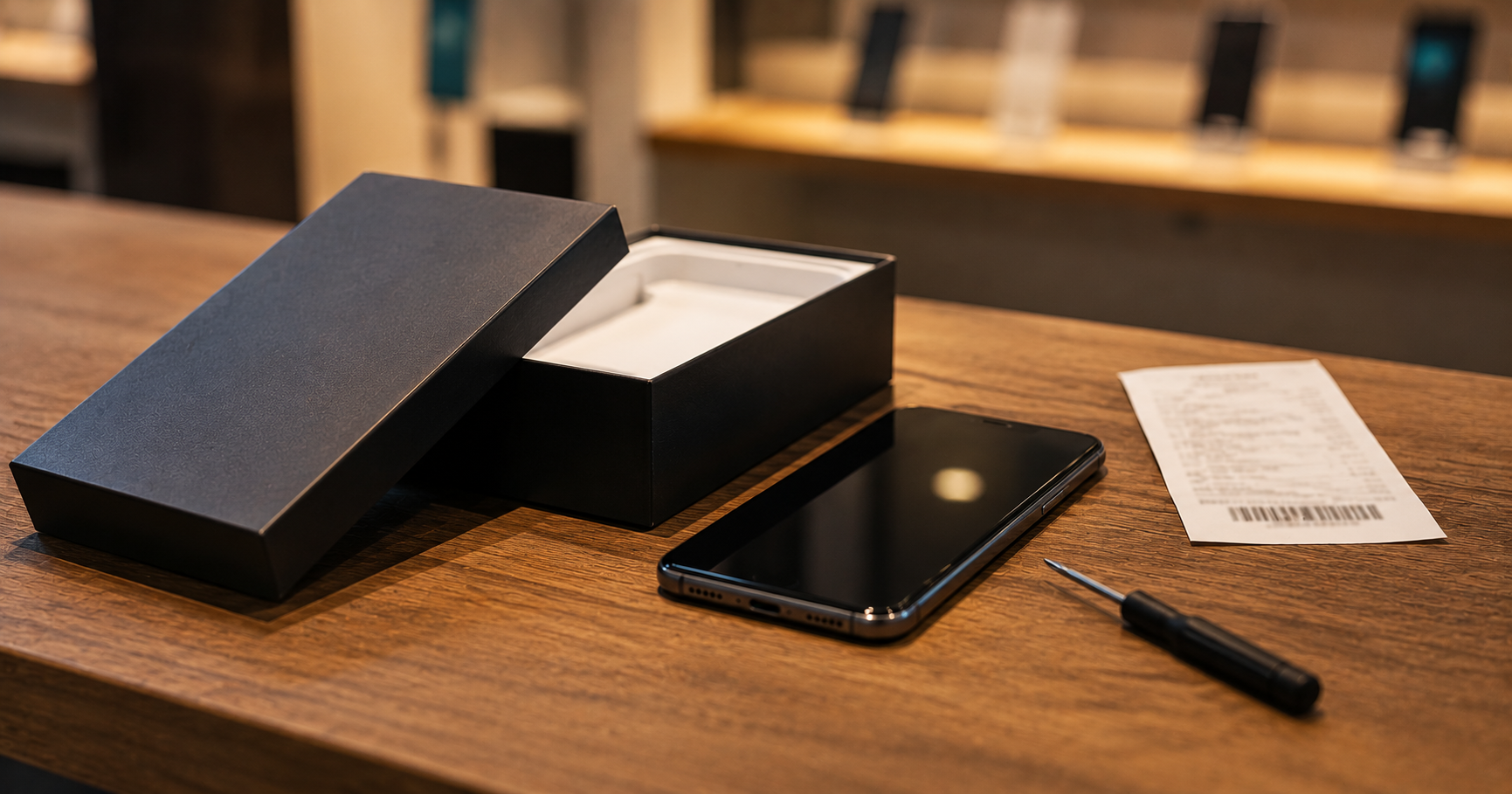
Ask for the original box and receipt. Not essential, but their presence is a reasonable signal and their absence on an expensive phone deserves a question.
The Price Signal
If the price is significantly below market, there is a reason. The reason is usually one of four things.
It is non-PTA and will block after the grace period.
It is refurbished being sold as new.
It is stolen, in which case the IMEI may be blocked separately by the network.
It has a fault the seller has not disclosed.
A phone priced 30 to 40 percent below every other listing for the same model is not a bargain that everyone else missed. Treat unusual discounts as a prompt to check harder rather than to buy faster.
Paying Safely
Never pay in full in advance to an individual seller. Advance payment scams are common and recovery is effectively impossible.
For in-person purchases, pay after testing, not before.
For online marketplace purchases, use the platform’s payment system rather than direct bank transfer. Direct transfer removes every protection the platform offers.
Keep the receipt. For warranty claims, for resale, and for proof of purchase if the device is later flagged.
Photograph the IMEI, the box, and the receipt on the day of purchase and store them somewhere you will find them in two years.
What to Do If Something Goes Wrong
If the phone blocks after purchase, first check the IMEI status by SMS to 8484 to confirm whether the issue is PTA registration or a network block.
If it is PTA registration and the seller claimed the device was approved, that is misrepresentation. Marketplace platforms will usually act on this if the purchase went through their system.
If the IMEI shows as blocked by the network rather than unregistered, the device may be reported stolen. Do not attempt to use it. Report it.
For faults within warranty on an authorised purchase, go to the brand service centre with the receipt rather than back to the retailer.
How do you check if a phone is PTA approved in Pakistan?
Dial star hash zero six hash on the phone to display the IMEI, then send that IMEI number by SMS to 8484. The reply confirms whether the device is registered and compliant with PTA requirements. Also cross-check the IMEI shown on screen against the number printed on the box and on the device itself, since IMEI cloning involves reprogramming a blocked handset with a valid number from another device. If the printed and displayed numbers do not match, do not proceed with the purchase.
What happens if you buy a phone in Pakistan that is not PTA approved?
A non-PTA phone typically works normally for approximately 60 days before being blocked from connecting to Pakistani mobile networks. After that point the device cannot make calls or use mobile data on any local network until the registration tax is paid, which on flagship devices frequently amounts to a substantial six-figure rupee sum. The phone continues to work on wifi. Sellers sometimes do not disclose non-PTA status, and by the time the block occurs they are often unreachable.
How can you tell if a phone is refurbished rather than new?
Check four things. The factory seal, which is difficult to replicate convincingly on Samsung and Apple packaging. The accessories, which should be present and unopened. The battery health, visible on iPhone under Settings, Battery, Battery Health, where a genuinely new device reads 100 percent maximum capacity. And the warranty activation date on the manufacturer’s official website using the serial number, which reveals whether a phone described as new was actually activated months earlier.
The Short Version
Dial star hash zero six hash. Text the IMEI to 8484. Compare the number on screen against the number on the box. Check battery health and warranty activation date online.
Four checks, five minutes, and they eliminate the overwhelming majority of ways this goes wrong.
The rest is judgement. Unusually low prices have reasons. Advance payment to strangers is how people lose money. And when you buy a phone in Pakistan above PKR 100,000, the premium for an authorised store is genuinely worth what it costs.
For more phone guides, comparisons, and buying advice, visit GmoArena’s Mobile Phones section.
Sources and Further Reading
- Pakistan Telecommunication Authority DIRBS device registration system, pta.gov.pk
- PTA IMEI verification service, SMS to 8484
- Manufacturer warranty verification portals for Samsung, Apple and Xiaomi
About this article: Written by the GmoArena editorial team covering global celebrity culture, mobile technology, travel destinations, and the stories that matter.