
Best Power Bank 2026: Tested Picks for Every Budget and Use Case
In most of the world, a power bank is a convenience. You carry one because your phone might dip low on a long day out. In Pakistan, it is closer to essential equipment. When unscheduled loadshedding hits at 2pm in July and your phone is at 30 percent with six hours of daylight left, a power bank stops being an accessory and becomes the thing that keeps you contactable.
The good news is that the best power bank options in 2026 are dramatically better than what was available three years ago. USB-C Power Delivery 3.1 now pushes up to 240 watts, which means power banks have gone from topping up phones to genuinely charging laptops at full speed. The bad news is that the market is crowded with hundreds of options and most buyers pick on capacity alone, which is the wrong number to focus on.
Here is what actually matters, which models are worth your money, and how to choose without overthinking it.
The Numbers That Actually Matter
Most people compare power banks on mAh and nothing else. That is a mistake, because capacity tells you how much energy is stored, not how usefully you can get it out.
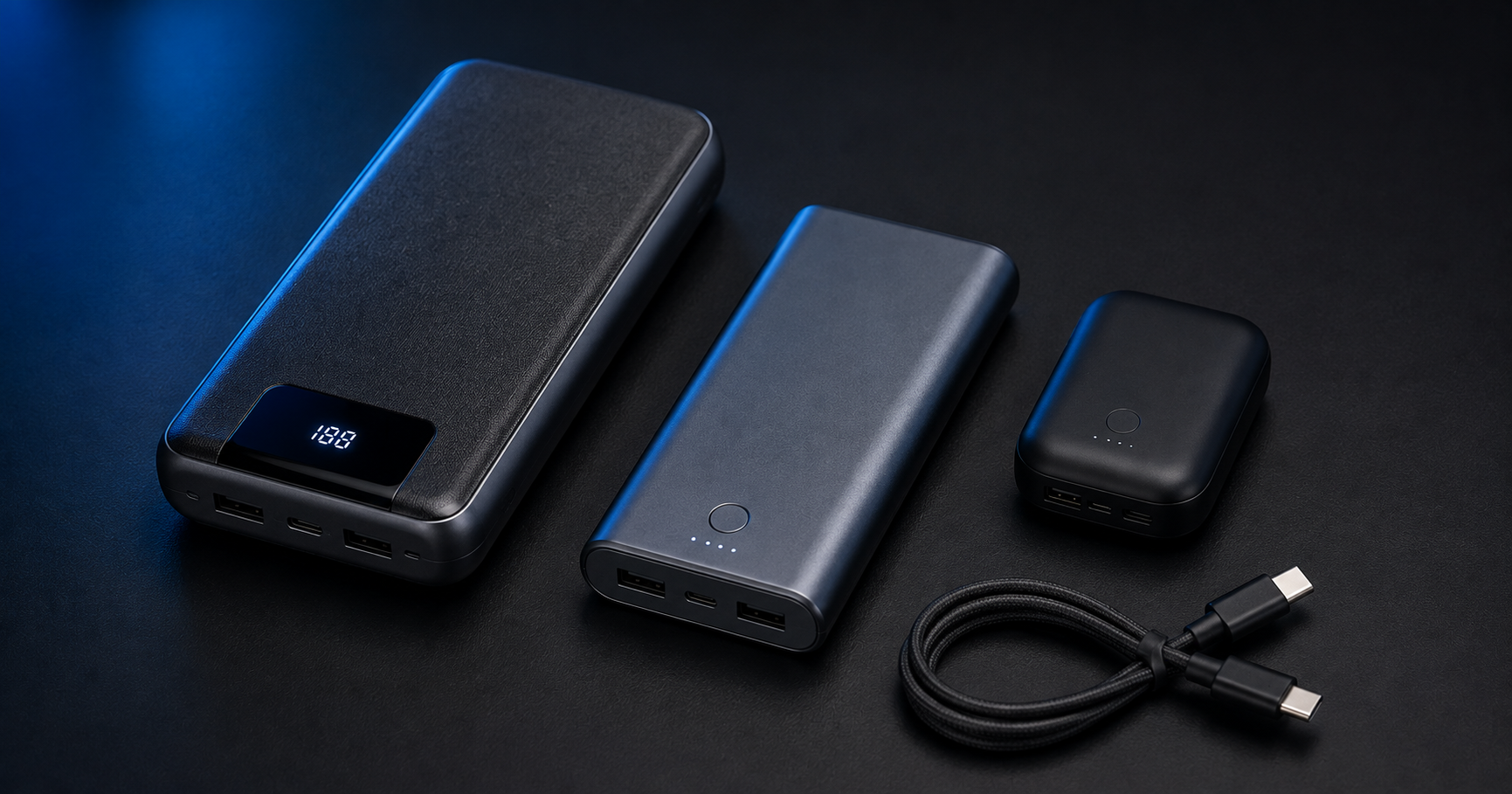
Capacity, in mAh. 10,000mAh gives you roughly one to two full phone charges and is the right size for daily carry. 20,000mAh covers a weekend or several devices. 25,000mAh and above enters laptop charging territory.
Output, in watts. This determines charging speed. A 10,000mAh bank with 18W output will refill your phone slowly. The same capacity with 30W or higher does it in a fraction of the time. For laptop charging you need at least 65W, and ideally 100W or above.
Ports. Two USB-C plus one USB-A is the practical standard. Check whether the advertised maximum output is available from a single port or split across all of them, because those are very different things.
Recharge time. Frequently ignored and genuinely important in Pakistan. A power bank that takes six hours to refill is useless if your electricity window is two hours. Look for banks supporting fast input charging.
That last point deserves emphasis. In a loadshedding context, recharge speed matters as much as capacity, because the constraint is not how much energy you can store but how quickly you can capture it when power is available. To read more phone and accessory guides, visit GmoArena’s Mobile Phones section.
Best Overall: Anker Prime 27,650mAh
Independent testing consistently places the Anker Prime at the top of the category. Reviewers describe it as the most capable power bank you can buy in 2026, with 27,650mAh of capacity and 250 watts of total output across three ports.
It can charge a MacBook Pro at full speed while simultaneously topping off a phone and earbuds. Anker’s first 250W dual-port input recharges the bank itself to 50 percent in just 13 minutes, which addresses the recharge speed problem more comprehensively than anything else on the market.
A colour digital display shows real-time power flow and remaining capacity. Pricing sits around 199 dollars on sale from 229 dollars.
At 99.75Wh it stays just under the TSA carry-on limit of 100Wh for lithium batteries, which means it is flight-approved without paperwork. That engineering detail matters more than it sounds if you travel.
Best for: Anyone charging a laptop on the go, and anyone who needs the fastest possible recharge when power is available.
Best Value: UGREEN Nexode 25,000mAh
The UGREEN Nexode is the value pick that most buyers should actually choose, and multiple independent reviewers reach the same conclusion.
It delivers 200 watts total output across three ports, two USB-C and one USB-A, with PD 3.1 pushing a single port up to 140 watts. Dual 100 watt outputs charge a 16-inch MacBook Pro to around 54 to 56 percent in 30 minutes. A premium TFT display shows real-time voltage, current, and remaining battery.
Recharge takes about two hours with a 65 watt charger. Safety features include a V-0 flame-retardant casing, a ThermalGuard system, and NTC temperature monitors, which matters in a country where summer ambient temperatures routinely exceed 40 degrees.
The retail price is around 100 dollars but it is frequently discounted substantially, with reviewers noting prices as low as 70 to 75 dollars.
Best for: Most people. It does nearly everything the Anker Prime does at meaningfully lower cost.
Best for Maximum Capacity: Baseus 30,000mAh
For anyone who wants the most stored energy available, the Baseus 30,000mAh with 65 watt output packs the largest capacity in most tested lineups, delivering six or more phone charges. It includes a built-in LED flashlight, which is genuinely useful during extended power cuts rather than a gimmick.
At around 49 to 65 dollars it is outstanding value for the capacity. The one caveat is that its 111Wh rating exceeds the 100Wh airline carry-on threshold, so it requires approval if you fly with it.
Best for: Home backup during loadshedding, camping, and anyone who prioritises total capacity over portability and does not fly frequently.
Best for Daily Carry: UGREEN Uno 10,000mAh Magnetic
Not everyone needs a laptop charger in their bag. For daily carry, a 10,000mAh magnetic bank that sticks to the back of the phone is far more practical than a heavy brick.
The UGREEN Uno offers 10,000mAh with wireless magnetic charging and a small display showing emoji-style faces indicating charge status. Reviewers praise the strong magnet, which keeps the connection stable during use, and note it provides at least a couple of recharges for most phones including recent iPhones.
The trade-offs are honest ones. It adds noticeable weight to the phone when attached, and the wired charging could be faster.
Best for: Commuters, students, and anyone who wants a top-up without carrying a separate cable.
Best for Wireless Charging: Qi2 25W Models
Wireless power banks have improved substantially. Qi2 at 25 watts is now the ceiling for wireless charging speed, and models supporting it are worth the premium if you intend wireless to be your primary charging method.
Qi2 at 15 watts remains adequate for overnight top-ups. If you are charging while actively using the phone, aim for 25 watts. The Belkin UltraCharge Pro 10K supports Qi2 at 25 watts and sits in the small-carry tier alongside Qi2 15 watt options.
One practical warning for Pakistani conditions: wireless charging generates more heat than wired charging, and heat is the single largest cause of battery degradation. In summer, wired charging is meaningfully kinder to your phone’s battery.
What Size Should You Actually Buy?
Matching capacity to use case saves both money and unnecessary weight.
5,000 to 10,000mAh. Daily carry, commuting, one to two phone charges. Pocketable. The right choice if you are topping up rather than running entirely off battery.
20,000mAh. Travel, weekends, multiple devices, or a full day with no access to power. This is the sweet spot for most Pakistani buyers dealing with extended loadshedding, since it covers a phone plus a second device through a long outage.
25,000mAh and above. Laptop charging. Requires at least one 140 watt USB-C port to be genuinely useful for a laptop. Heavier and more expensive, worth it only if you actually need to run a laptop away from mains power.
30,000mAh and above. Home backup and off-grid use. Check airline rules before travelling with these.
Buying in Pakistan and India: What to Watch
Several practical considerations apply specifically in South Asian markets.
Counterfeits are widespread. Anker, UGREEN, and Baseus are among the most frequently counterfeited electronics brands. A fake power bank does not simply underperform, it often lacks the thermal protection and cell quality that prevent swelling and fire risk. Buy from authorised retailers or established marketplaces with buyer protection, not the cheapest available listing.
Verify actual capacity. Counterfeit and low-quality banks routinely advertise 20,000mAh while delivering a fraction of that. A genuine 20,000mAh power bank has physical weight to it. If it feels suspiciously light, it probably is.
Heat management matters more here. Features like flame-retardant casing and temperature monitoring are not marketing padding in a climate where ambient temperatures exceed 40 degrees for months. Charging a phone from a power bank in a hot room stresses both batteries.
Prioritise recharge speed. This is the point most reviews written for European or American readers miss entirely. When your charging window is unpredictable, a bank that refills to 50 percent in 13 minutes is worth substantially more than one with slightly higher capacity that takes six hours.
Quick Recommendations
Best overall: Anker Prime 27,650mAh. Fastest recharge, highest output, flight-legal.
Best value: UGREEN Nexode 25,000mAh. Nearly the same capability at a substantially lower price.
Best capacity: Baseus 30,000mAh. Most stored energy, built-in flashlight, excellent price.
Best daily carry: UGREEN Uno 10,000mAh magnetic. Pocketable and cable-free.
Best for loadshedding: A 20,000mAh bank with fast input charging. Capacity for a full outage, recharge speed to capture short power windows.
What is the best power bank to buy in 2026?
The Anker Prime 27,650mAh is widely rated as the best power bank overall in 2026, offering 250 watts of total output across three ports, the ability to charge a laptop at full speed while topping up other devices, and a 250 watt dual-port input that recharges the bank to 50 percent in 13 minutes. At 99.75Wh it stays under the airline carry-on limit. For better value, the UGREEN Nexode 25,000mAh delivers 200 watts across three ports with 140 watt single-port PD 3.1 output, and is frequently discounted well below its retail price.
How many mAh do you need in a power bank?
It depends entirely on use case. 10,000mAh provides one to two full phone charges and suits daily carry and commuting. 20,000mAh covers travel, weekends, or a full day with multiple devices and no mains access, making it the practical choice during extended power outages. 25,000mAh or higher is required for laptop charging, and only useful if paired with at least one 140 watt USB-C port. Capacity above 100Wh, which includes most 30,000mAh models, requires airline approval for carry-on.
Is it safe to buy cheap power banks?
Cheap power banks from unknown brands carry genuine safety risk. Low-quality cells and absent thermal protection can lead to swelling, overheating, and in rare cases fire. Counterfeit versions of established brands like Anker, UGREEN, and Baseus are widespread in South Asian markets and often deliver a fraction of their advertised capacity. Look for named safety features such as flame-retardant casing and temperature monitoring, buy from authorised retailers or marketplaces with buyer protection, and treat a suspiciously light 20,000mAh unit as a warning sign.
The Short Version
Buy the UGREEN Nexode 25,000mAh if you want the best balance of capability and price. Buy the Anker Prime if you need the fastest recharge and laptop-class output and can justify the cost. Buy a 10,000mAh magnetic bank if you only ever top up a phone.
Whatever you choose, weight the recharge speed more heavily than most reviews suggest. Capacity determines how long you can go without power. Recharge speed determines how quickly you are ready for the next outage, and in this part of the world that is the number that actually shapes your day.
For more accessory guides, phone comparisons, and buying advice across every budget, visit GmoArena’s Mobile Phones section.
Sources and Further Reading
- The Great Reviewer hands-on testing of 25 portable chargers across major brands
- The Gadgeteer on Anker Prime, UGREEN Nexode and airline capacity limits
- Smart Gear Outlet ranked testing of ten power banks across five categories
About this article: Written by the GmoArena editorial team covering global celebrity culture, mobile technology, travel destinations, and the stories that matter.
Editorial Note: Specifications and pricing are based on independent testing published by The Great Reviewer, The Gadgeteer, Smart Gear Outlet, BGR, and CNN Underscored during 2026. Prices are US retail and vary significantly in markets where import duties apply. Airline battery capacity limits differ by carrier and route. Verify current pricing, warranty coverage, and airline rules before purchasing or travelling.