

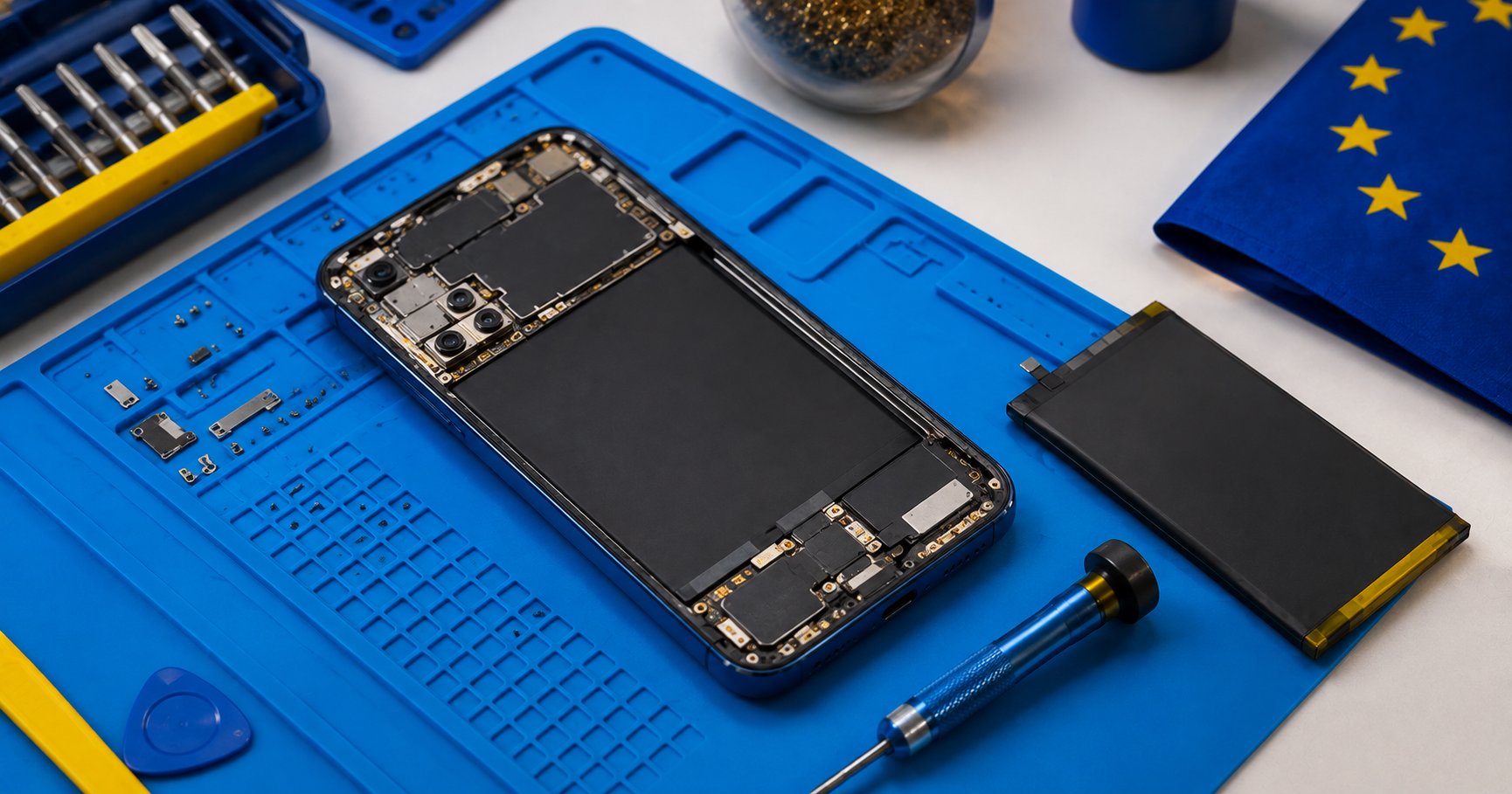
Your Phone Rights in Europe Are Better Than You Think,and They Get Better in February 2027: eu replaceable battery rules 2027
Your phone is two years old. The screen is fine, the processor is fine, the camera still takes decent photos. But the battery no longer gets you through a day, and the shop wants a substantial sum to open the device and replace it. So you start browsing new phones instead, which is exactly what the manufacturer designed the situation to produce.
The European Union has decided this cycle should end, and unlike most consumer complaints, it has put actual law behind that decision. If you buy a phone in the EU, you already have protections that exist nowhere else in the world, and from February 2027 you will have considerably more. Most people who benefit from these rules do not know they exist.
Here is what has already changed, what arrives next year, and how to actually use these rights.
eu replaceable battery rules 2027
What Already Applies Since June 2025
The EU ecodesign regulation for smartphones and tablets came into force on 20 June 2025. Any phone bought in an EU country since that date is covered by four requirements that manufacturers cannot opt out of.
Seven Years of Spare Parts
Manufacturers must keep spare parts available, including batteries, displays, and charging ports, for at least seven years after a model is discontinued. A phone bought today should still have replacement components available well into the 2030s.
This is genuinely significant. The most common reason a repairable phone gets thrown away is that the part no longer exists. Seven years of guaranteed availability removes that excuse entirely.
Five Years of Software Updates
Manufacturers must provide operating system updates for a minimum of five years after a model leaves the market. This matters because a phone that stops receiving security patches becomes unsafe to use for banking and email long before the hardware fails.
Battery Durability Standards
Batteries must retain a defined residual capacity after 500 full charge cycles. This sets a floor on quality that manufacturers previously determined for themselves.
Performance Throttling Must Be Disclosed and Reversible
If your older phone suddenly feels slower, it is often the device deliberately reducing performance to protect a degraded battery. Under EU rules manufacturers must be upfront about this and allow you to reverse it. Apple faced significant legal consequences years ago for doing this quietly. Now the disclosure is mandatory.
For more coverage of technology and consumer issues, visit GmoArena’s Technology section.
What Changes on 18 February 2027
This is the headline change and it is more substantial than most reporting has conveyed.
From 18 February 2027, new smartphones and tablets sold in the EU must be designed so that end users can remove and replace the battery themselves using standard tools. The specific requirements are unusually detailed for legislation.
Replacement must be possible with standard tools, meaning something like an ordinary screwdriver rather than proprietary equipment.
Adhesives requiring heat or solvents to remove are prohibited. This is the provision that genuinely changes phone design. The heat gun and suction cup routine that currently defines phone battery replacement will no longer be legal for new devices.
If a special tool is genuinely required, the manufacturer must supply it free of charge. No selling you a proprietary kit to access your own device.
Replacement must be feasible in an ordinary environment, not only in a specialised repair facility.
Article 11 of the EU Batteries Regulation goes further, requiring that portable batteries be readily removable and replaceable by the end user at any point during the product’s lifetime, and specifying that manufacturers cannot require proprietary components.
The Exemption Nobody Is Talking About
Here is the part that consumer groups are genuinely unhappy about, and you should know about it before assuming every 2027 phone will have a removable battery.
The European Commission’s guidelines state that for portable batteries covered by the smartphone ecodesign regulation, that regulation takes precedence over the Batteries Regulation. This creates an exemption from removability requirements for devices meeting certain battery longevity and waterproofing standards.
In plain terms: a manufacturer can build a phone with a sealed battery if it demonstrates sufficient battery longevity and water resistance. Right to Repair Europe, a coalition representing over 190 organisations across 30 European countries, has argued this runs directly against the aim of the Batteries Regulation and reinforces a false choice between durability and repairability.
Whether major manufacturers use this exemption broadly will determine how much the February 2027 rules actually change what is on shop shelves. The regulation is real. So is the loophole.
The Battery Passport
A less discussed provision has significant practical value, particularly if you buy used phones.
Batteries will carry a printed QR code storing information about the battery’s carbon footprint, its proportion of recycled materials, its chemical composition, and critically, its state of health. Users and recycling facilities can access this data directly.
For anyone buying a second-hand phone, this changes the transaction entirely. Instead of taking a seller’s word on battery condition, you scan a code and see the actual state of health. Europe’s used phone market is large and this provision makes it substantially more trustworthy.
The Rules Already in Effect That You Are Using
The current wave of regulation follows the Common Charger Directive, which took effect in 2024 and requires all portable electronics including phones, tablets, and cameras to charge via USB-C. That rule was extended to laptops in April 2026.
The estimated impact is a reduction of 980 tonnes of electronic waste per year, and it is the reason Apple moved the iPhone to USB-C. A rule written in Brussels changed a product sold globally, which is precisely the pattern the battery rules are expected to follow.
What This Means If You Live in Europe
If your current phone was bought after June 2025, you already have the right to seven years of spare parts availability, five years of software updates, and disclosed reversible throttling. If a repair shop tells you a part is unavailable for a recent phone, that may not be legally accurate. Ask the manufacturer directly.
If you are considering replacing a phone because of battery life, price a battery replacement first. With guaranteed spare parts availability, this is a far more viable option than it was three years ago, and it is almost always cheaper than a new device.
If you can wait until after February 2027, phones sold in the EU from that date should have genuinely user-replaceable batteries, subject to the durability exemption discussed above. Whether that is worth waiting eighteen months for depends entirely on how urgently you need a new device.
If you buy second-hand, the battery passport arriving with the 2027 rules will make used purchases considerably safer. Until then, ask for a battery health screenshot before buying.
Why This Matters Beyond Europe
These laws apply only within the EU. They do not create rights for buyers in Pakistan, India, the United States, or anywhere else.
But the economics of mass manufacturing mean the effects spread. Building two entirely separate phone designs, one repairable for Europe and one sealed for everywhere else, is expensive. It is usually cheaper to build one device to the strictest applicable standard and sell it everywhere.
That is exactly what happened with USB-C. Apple did not switch the iPhone to USB-C because American consumers demanded it. It switched because the EU required it and maintaining two designs made no commercial sense.
If the same logic holds for batteries, phones sold worldwide from 2027 onward may become meaningfully easier to repair, regardless of where you buy them.
Do EU phones have to have removable batteries from 2027?
From 18 February 2027, new smartphones and tablets sold in the EU must be designed so end users can remove and replace the battery using standard tools. Adhesives requiring heat or solvents to remove are prohibited, and if a special tool is needed the manufacturer must supply it free of charge. However, the European Commission’s guidelines allow an exemption from removability requirements for devices meeting certain battery longevity and waterproofing standards, which means some phones may still ship with sealed batteries if manufacturers meet those durability criteria.
How long must EU phone manufacturers provide spare parts?
Under the EU ecodesign regulation in force since 20 June 2025, manufacturers must keep spare parts available including batteries, displays, and charging ports for at least seven years after a phone model is discontinued. The same regulation requires a minimum of five years of operating system updates after a model leaves the market. Both requirements apply to any phone sold in an EU member state since June 2025, meaning replacement components for phones bought today should remain available into the 2030s.
Do these EU rules apply outside Europe?
No, these regulations apply only within the European Union’s 27 member states and do not create legal rights for buyers elsewhere. However, the practical effect often extends globally because manufacturers generally find it cheaper to build a single device design meeting the strictest applicable standard rather than maintaining separate versions for different markets. The EU Common Charger Directive, which required USB-C charging, produced exactly this outcome when Apple switched the iPhone to USB-C globally rather than building a separate EU model.
The Practical Summary
If you are in Europe, you have more rights over your phone than you probably realised. Seven years of spare parts. Five years of updates. Mandatory disclosure of performance throttling. And from February 2027, batteries you can replace yourself with a screwdriver rather than a heat gun and a prayer.
The exemption for durable waterproof designs means the transformation may be less complete than the headlines suggest, and that is worth watching as manufacturers announce their 2027 lineups. But the direction of travel is clear, and for once it points toward the consumer rather than away.
Next time a battery starts fading, check what the manufacturer is legally obliged to provide before you start browsing replacements.
For more technology coverage, consumer guides, and analysis of the rules shaping the devices we use, visit GmoArena’s Technology section.
Sources and Further Reading
- Reviews.org detailed breakdown of EU replaceable battery rules and current ecodesign requirements
- Right to Repair Europe analysis of the EU guidelines and the durability exemption
- EcoPV EU guide to the February 2027 requirements and battery passport provisions
About this article: Written by the GmoArena editorial team covering global celebrity culture, mobile technology, travel destinations, and the stories that matter.
Editorial Note: This article summarises EU Regulation 2023/1670 and EU Batteries Regulation 2023/1542 based on reporting from Reviews.org, Right to Repair Europe, EcoPV EU, TechRadar, and Compare and Recycle during 2026. It provides general information and is not legal advice. Regulatory detail and exemption criteria continue to be refined through delegated acts. Consult official European Commission publications for authoritative guidance.