Pakistan Guide 2026 — Culture Travel Business and Lifestyle
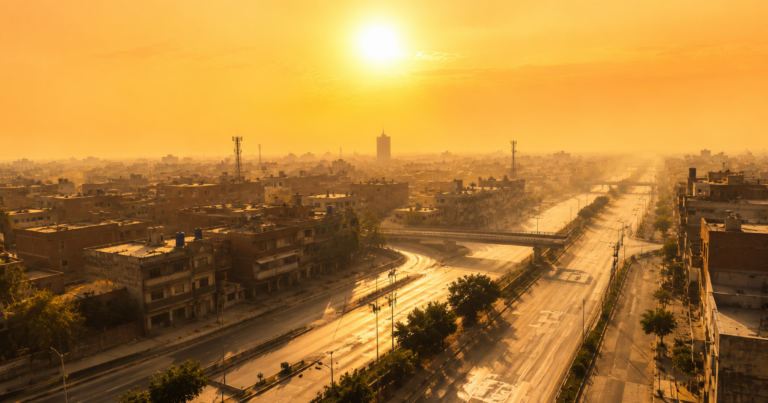
Pakistan in 2026 is not the country the world thinks it knows. With over 240 million people, a median age of just 22 years, and a digital economy growing at double digits, Pakistan is quietly becoming one of Asia’s most compelling stories. From the ancient ruins of Mohenjo-daro to the glass towers rising in Lahore’s new business districts, from freelancers earning six-figure dollar incomes from Karachi apartments to mountain trekkers discovering K2 base camp for the first time — Pakistan in 2026 is a place of extraordinary contrast and undeniable momentum. This Pakistan guide 2026 is your complete resource: travel, culture, business, food, education, and lifestyle all in one place. Whether you are a traveler planning your first visit, an investor researching emerging markets, a student choosing a university, or simply someone curious about one of the world’s most misunderstood nations — this guide covers everything you need to know. GmoArena.com has pulled together real data, current prices, on-the-ground reporting, and expert perspectives to bring you the most thorough Pakistan guide 2026 available anywhere online. Bookmark this page — it is your hub for everything Pakistan.
Best Places to Visit in Pakistan 2026 — Complete Travel Guide
Pakistan’s tourism sector has undergone a genuine transformation. In 2025, the country welcomed over 2.1 million international tourists — a 34 percent increase from 2023 — and 2026 is set to break records again. The government’s Vision 2025 Tourism Policy opened visa-on-arrival access to over 175 nationalities, making it dramatically easier for travelers from Europe, North America, East Asia, and the Gulf to enter without lengthy paperwork.
The Karakoram Highway connecting Pakistan to China remains one of the world’s most dramatic road journeys, cutting through Gilgit-Baltistan past glaciers, gorges, and villages where time moves at its own pace. Hunza Valley continues to be the crown jewel, drawing visitors from Germany, South Korea, Australia, and the United States who come for the apricot blossoms in spring and the crystal-clear skies in autumn. A standard eight-day northern Pakistan tour package from Islamabad runs between PKR 85,000 and PKR 150,000 depending on accommodation grade — roughly $300 to $550 USD at current rates, making it extraordinary value.
In the south, Lahore’s walled city offers the Mughal grandeur of Badshahi Mosque and Lahore Fort, while Karachi’s Clifton Beach and the nearby Makran Coastal Highway give coastal travelers rugged Arabian Sea scenery. For history lovers, Mohenjo-daro in Sindh is a UNESCO World Heritage Site dating back to 2500 BCE. Budget travelers will find Pakistan astonishingly affordable — a decent guesthouse in Gilgit costs PKR 3,000 to 5,000 per night (around $10–$18 USD), and a full street-food dinner rarely exceeds PKR 500. Pack your hiking boots. Pack your camera. Pakistan rewards the curious traveler generously.
Pakistani Celebrities and Entertainment in 2026
Pakistan’s entertainment industry has never been louder on the global stage. The country’s music scene — historically anchored by the legendary Coke Studio franchise — continues to produce viral moments. In 2025, several Coke Studio tracks crossed 100 million views on YouTube, with listeners tuning in from India, the UK’s large Pakistani diaspora, and increasingly from Southeast Asia and East Africa.
On the drama front, Pakistani television serials have built a devoted following that stretches far beyond South Asia. Platforms including YouTube, ARY Digital’s international streams, and increasingly Amazon Prime Video have given Pakistani storytelling a genuinely global audience. Actresses like Mahira Khan and Yumna Zaidi maintain massive social media followings internationally, while younger actors are rapidly building audiences across TikTok and Instagram.
Pakistani fashion is experiencing a parallel boom. Brands like Sana Safinaz, Khaadi, and newer luxury labels are showing at international fashion weeks and shipping to customers in over 40 countries. The annual Pakistan Fashion Design Council (PFDC) Sunsilk Fashion Week in Lahore draws international press and buyers. Meanwhile, the Pakistani film industry — sometimes called Lollywood — is producing higher-budget productions than ever before, with several 2025 and 2026 releases targeting the global South Asian diaspora market across the UK, UAE, Canada, and the United States. Pakistani entertainment in 2026 is an industry that has found its confidence — and its audience.
Business and Economy in Pakistan 2026
Pakistan’s economy in 2026 presents a story of stabilization after turbulence. Following an IMF Extended Fund Facility agreement and painful but necessary structural reforms in 2023 and 2024, inflation has eased from its peak of over 38 percent in 2023 to a more manageable 12 to 14 percent range by mid-2026. The Pakistani rupee has stabilized, foreign exchange reserves have improved, and the IMF projected GDP growth of approximately 3.5 to 4 percent for fiscal year 2026 — modest but meaningful for a country navigating a difficult transition.
Key sectors drawing foreign investment include information technology, renewable energy, agriculture technology, and real estate. The China-Pakistan Economic Corridor (CPEC) continues to mature in its second phase, with special economic zones in Gwadar, Lahore, and Faisalabad attracting manufacturing investment from Chinese, Turkish, and Gulf companies. The Saudi-Pakistan Investment Summit agreements signed in 2024 are beginning to materialize into ground-level projects across mining, agriculture, and hospitality.
For entrepreneurs and founders, Pakistan’s startup ecosystem — centered in Karachi, Lahore, and Islamabad — raised over $85 million USD in venture capital in 2025. Fintech, edtech, and health tech are the hottest verticals. If you are considering entering this market, our detailed feature How to Start a Business in Pakistan Complete Guide 2026 covers registration, banking, tax registration with FBR, and the practical steps every founder needs to know before launch day.
Pakistani Food Culture — Street Food and Restaurant Scene
Food is arguably Pakistan’s greatest cultural export — and in 2026, the world is increasingly aware of it. The Pakistani food scene operates on two parallel tracks: the chaotic, glorious world of street food and the rapidly evolving fine dining and restaurant industry in major cities.
On the streets, nothing competes with Lahore’s Food Street near Gawalmandi or the dense alleyways of Karachi’s Burns Road. Dishes that define the cuisine include nihari (slow-cooked beef stew, a breakfast staple across Punjab), biryani (with distinct Karachi, Hyderabadi, and Sindhi variations), seekh kebabs from smoky charcoal grills, and haleem — a slow-cooked wheat and meat porridge that Londoners, Torontonians, and Dubaiites queue for in Pakistani diaspora restaurants. A full street-food meal in Lahore or Karachi costs between PKR 400 and PKR 800 — less than $3 USD.
The restaurant sector has simultaneously grown more sophisticated. Karachi alone has seen dozens of international restaurant brands enter the market since 2022, alongside homegrown chains that are now expanding regionally into the Gulf. Farm-to-table Pakistani cuisine restaurants in Islamabad’s F-7 and F-6 sectors attract middle-class families and expats willing to spend PKR 3,000 to PKR 8,000 per meal. Pakistani food culture in 2026 is proud, experimental, and finally getting the international recognition it deserves.
Pakistani Freelancers and Digital Economy 2026
Perhaps no story about Pakistan in 2026 is more compelling than the freelancing revolution. Pakistan consistently ranks among the top five countries globally for freelance work on platforms including Upwork, Fiverr, and Toptal. According to the Pakistan Freelancers Association (PAFLA), the country had over 2.2 million registered freelancers by early 2026, collectively earning an estimated $600 to $700 million USD annually.
Young Pakistanis — many from cities like Faisalabad, Multan, and Peshawar rather than just the major metros — are building careers in web development, graphic design, video editing, digital marketing, AI prompt engineering, and increasingly high-value consulting for European and American firms. The government’s Kamyab Jawan and DigiSkills programs have trained hundreds of thousands of young people in marketable digital skills.
The dollar-income advantage is significant. A Pakistani freelancer earning $2,000 USD per month is living comfortably in the upper-middle class in Lahore or Islamabad, given local costs of living. Our in-depth feature How Pakistani Freelancers Are Earning in Dollars from Home 2026 profiles real freelancers, explains which platforms pay best, and gives a complete guide to setting up payment infrastructure including Payoneer, Wise, and local bank integration. The digital economy is not a side hustle for Pakistan’s young generation — it is a primary career path.
Pakistani Universities and Education Guide 2026
Pakistan’s higher education landscape in 2026 is larger and more competitive than at any previous point in its history. The Higher Education Commission (HEC) recognizes over 230 universities across the country — public and private — with enrollment numbers exceeding 2 million students. The country graduates thousands of engineers, doctors, computer scientists, and business professionals every year, many of whom go on to careers in the Gulf, UK, Canada, and the United States.
The top-ranked institutions consistently include LUMS (Lahore University of Management Sciences), NUST (National University of Sciences and Technology) in Islamabad, FAST-NUCES, Aga Khan University, and University of Karachi for its established legacy departments. International rankings have taken notice — NUST and LUMS both appear in the QS Asia University Rankings 2026.
Tuition fees vary dramatically: public universities charge PKR 20,000 to PKR 80,000 per semester, while elite private institutions like LUMS charge PKR 200,000 to PKR 350,000 per semester. Scholarship programs — both domestic and through international partnerships with Chinese, Turkish, and European universities — are increasingly available. For a full breakdown of admission requirements, ranking methodology, scholarship options, and faculty quality by discipline, our feature article Best Universities in Pakistan 2026 Rankings and Admissions Guide is the most comprehensive resource available on this topic.
Living in Pakistan — Cost of Living, Cities, and Lifestyle
For expats, returning diaspora, and digital nomads discovering Pakistan as a base, understanding the cost of living and lifestyle realities is essential. Pakistan remains one of Asia’s most affordable countries for daily living — but costs vary enormously between cities and lifestyle choices.
Islamabad is the most livable city by most measurements — clean, green, planned, and relatively secure — but also the most expensive for rent. A furnished two-bedroom apartment in F-7 or F-8 runs between PKR 80,000 and PKR 150,000 per month ($290–$545 USD). Lahore offers more energy, culture, and food options at slightly lower costs. Karachi is the business capital — chaotic, coastal, and commercially dynamic, with the widest range of housing from affordable to genuinely luxurious in DHA and Clifton.
Monthly expenses for a comfortable single-person lifestyle — including rent, food, transport, utilities, and entertainment — typically range from PKR 80,000 to PKR 150,000 in major cities (roughly $290–$545 USD). Groceries from local markets are extremely affordable. International schooling for expat families runs significantly higher, with institutions like the Islamabad International School charging $10,000 to $20,000 USD annually.
Pakistan’s lifestyle in 2026 is genuinely modern in its urban centers — coworking spaces, specialty coffee shops, international restaurant chains, e-commerce delivery within hours, and a vibrant social scene for young professionals. This Pakistan guide 2026 hopes to convey that Pakistan is not a destination for the brave alone — it is a destination for the curious.
Pakistan at a Glance — Quick Reference Table
| Category | Key Facts 2026 |
|---|---|
| Population | Approximately 240 million |
| Capital | Islamabad |
| Currency | Pakistani Rupee (PKR) — approx. PKR 275–285 per USD |
| GDP Growth (FY2026) | ~3.5–4% (IMF projection) |
| Freelance Workforce | 2.2+ million registered freelancers |
| International Tourists (2025) | 2.1 million |
| Top Travel Destination | Hunza Valley, Gilgit-Baltistan |
| Top University | LUMS / NUST (QS Asia Rankings 2026) |
| Monthly Cost of Living (Comfortable) | PKR 80,000–150,000 (~$290–$545 USD) |
| Official Languages | Urdu (national), English (official) |
| Startup VC Raised (2025) | ~$85 million USD |
| Visa Access | Visa-on-arrival for 175+ nationalities |
Frequently Asked Questions — Pakistan Guide 2026
Is Pakistan safe to visit for foreign tourists in 2026?
Pakistan’s safety situation varies significantly by region. Major tourist destinations including Islamabad, Lahore, Karachi, Hunza Valley, and the Karakoram Highway are considered safe for international tourists, with a growing infrastructure of registered tour guides, reputable guesthouses, and clear tourist support services. The government has deployed dedicated Tourist Police in key regions. Travelers should always check their government’s latest travel advisory, avoid border areas with Afghanistan, and register with their embassy upon arrival — standard precautions for any developing-country destination. Millions of international visitors travel Pakistan safely every year.
What is the best time of year to visit Pakistan?
The optimal travel window depends on your destination. For northern Pakistan — Hunza, Skardu, Gilgit-Baltistan — the ideal months are April through October, with late April bringing famous apricot blossoms and July through August offering peak trekking conditions. For Lahore and central Punjab, October through March is most comfortable, avoiding the intense summer heat that pushes temperatures above 45°C. Karachi and the Sindh coast is pleasant from November through February. Winter tourism in the northern valleys, including skiing at Malam Jabba in Swat, is growing rapidly and offers spectacular scenery from December through February.
How easy is it to start a business in Pakistan as a foreigner in 2026?
Foreign investment in Pakistan is legally protected and actively encouraged. The Board of Investment (BOI) allows 100 percent foreign ownership in most sectors, and the registration process — covering company incorporation through the Securities and Exchange Commission of Pakistan (SECP), tax registration with FBR, and provincial business licensing — has been digitized and significantly streamlined. Most company registrations can be completed within 3 to 5 working days online. Sectors including IT, renewable energy, tourism, and manufacturing offer additional incentives. Our article How to Start a Business in Pakistan Complete Guide 2026 walks through every step in detail.
Can international students study at Pakistani universities?
Yes — Pakistani universities actively recruit international students, particularly from
Yes — Pakistani universities actively recruit international students, particularly from China, Afghanistan, African nations, and the Middle East under bilateral education agreements. English-medium degree programs are widely available at LUMS, NUST, FAST-NUCES, and Aga Khan University. International applicants typically need SAT/A-Level equivalents and a valid student visa — the process is managed through the Higher Education Commission portal. Scholarship opportunities through the HEC International Scholarship Program cover full tuition and living stipends for qualifying students from over 30 countries.
Your Complete Guide to Pakistan Starts Here
Pakistan in 2026 is a country at an inflection point — stabilizing economically, growing digitally, rediscovering its tourism potential, and producing a generation of globally connected young people determined to build something lasting. This Pakistan guide 2026 is your starting point. Explore GmoArena.com for continuously updated articles on Pakistani celebrities, business opportunities, travel destinations, and the stories shaping this extraordinary country.